Functional electronics testing systems made modules, stand-alone, and easily integrable
Functional testing?
Functional occurs as the final step in quality assurance during manufacturing, applicable to both PCB’s before delivery, as well as fully assembled products.
As-designed: Functional testing can be derived directly from the design specifications and intended behavior of the product, rather than bottom-up testing of individual, separate components.
High-test coverage: Functional testing goes beyond optical inspection and connectivity tests, to also guarantee the correction internal functioning of coupled components.
Program, configure, calibrate: Functional testing naturally forms the most optimal step in the production process to flash firmware, perform device-specific configurations, and calibrate on-board systems before assembly.
Automation: A highly integrated and automated functional frees up precious manual labor time, as well as reduce dependence on manual operator input.
Traceablity: Each test run can log more than test results: PCB assembly tracing, component identifier, interface MAC address, and more. This creates an important link in the chain of end-to-end traceablilty
For who?
Product owner/OEM:
Take ownership of quality assurance at the source, signaling issues at production before they can reach the field. Functional testing is also the ideal place for your firmware to be programmed, configurations to be applied, and provisioning of devices to be carried out.
EMS:
Homogenize testing for your clients with our flexible architecture. Prevent test setups with poor reliability, repeatability, maintainability, or high manual input needs. Shorten the time till issues are noticed, which lower repair-effort.
7c7 Engineering has created ATNET:
A modular testing system that can be adapted to a wide variety of testing needs.
Modular
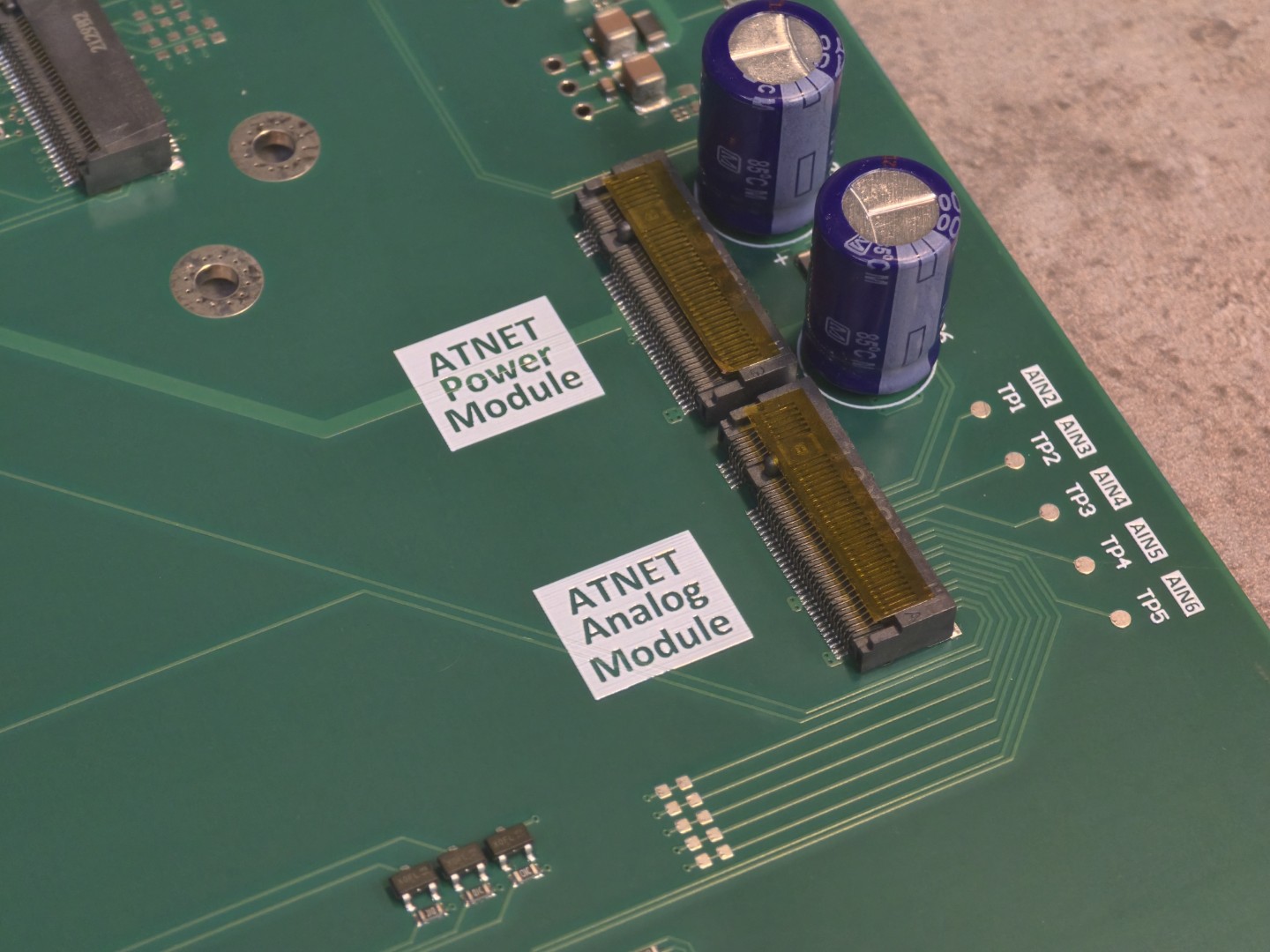
Recurring testing functions have been turned into interoperable modules, which can be easily swapped for maintenance, (re)calibration, or repurposing.
Confined customization
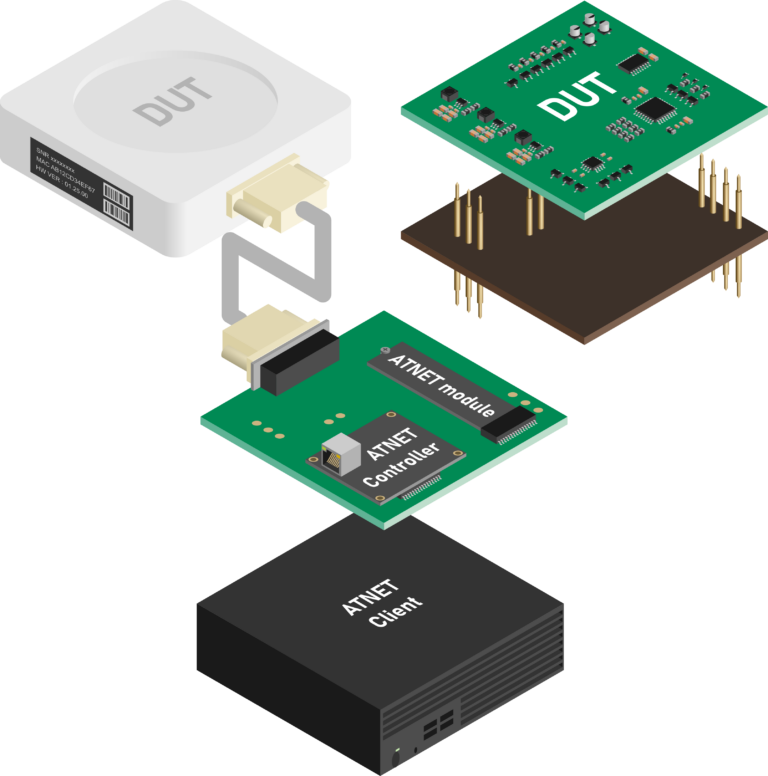
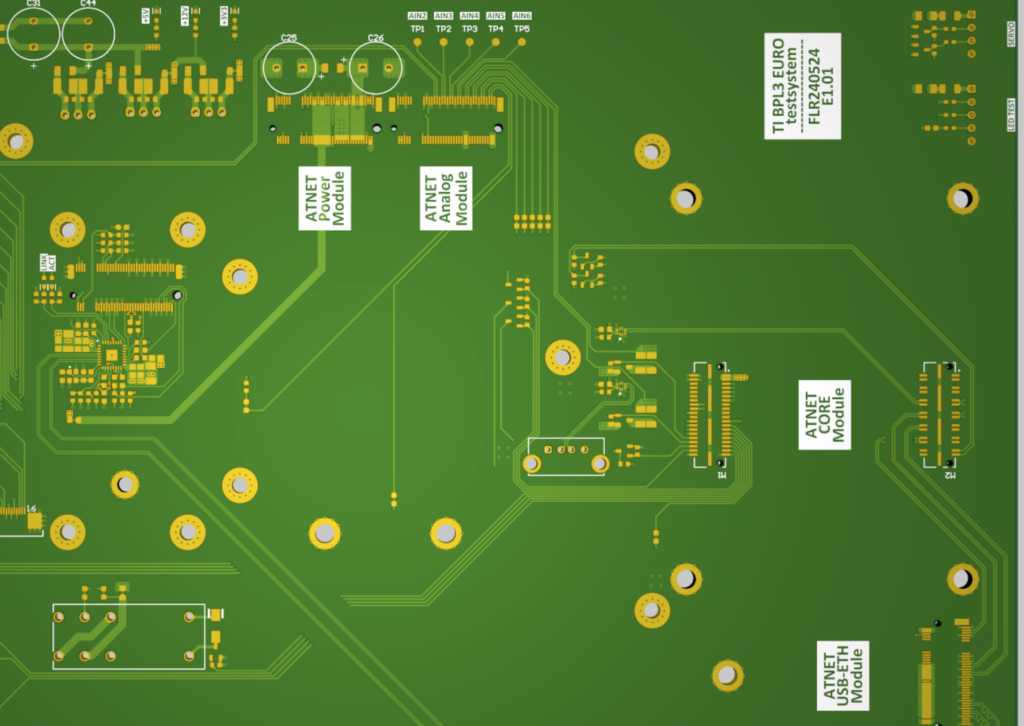
The modular nature of the ATNET ecosystem confines the customization for each product under test to a simple, cheap, interconnect PCB.
This lowers turnaround times, cost, and risks associated with customized engineering.
Websocket API
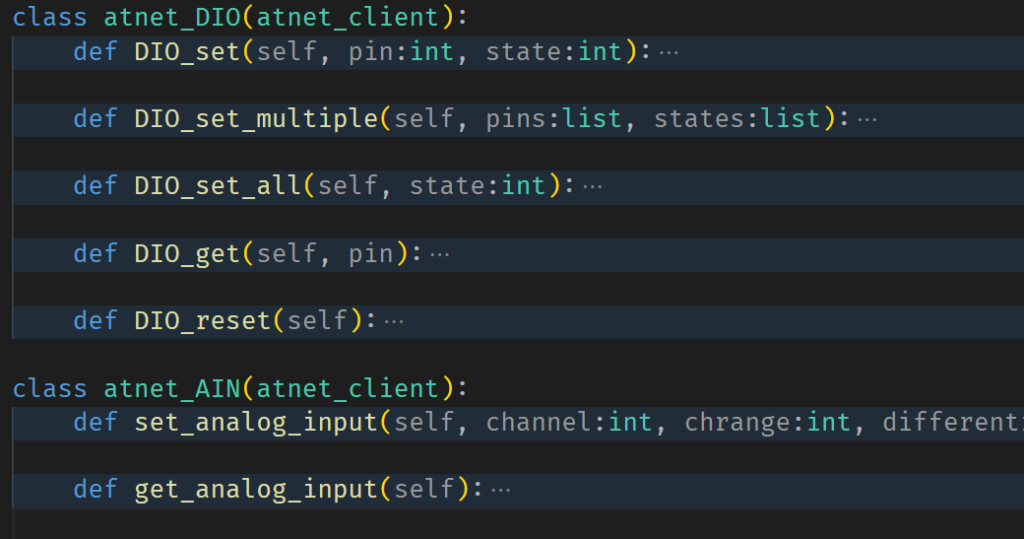
The ATNET ecosystem uses a client-server architecture, where the server is the test rig, ready to respond to client testing requests. The interface is fully specified over websocket, allowing easy client integration for any testing need.
A python client implementation is available, which has a proven track record in production in combination with NI TestStand
Full standalone
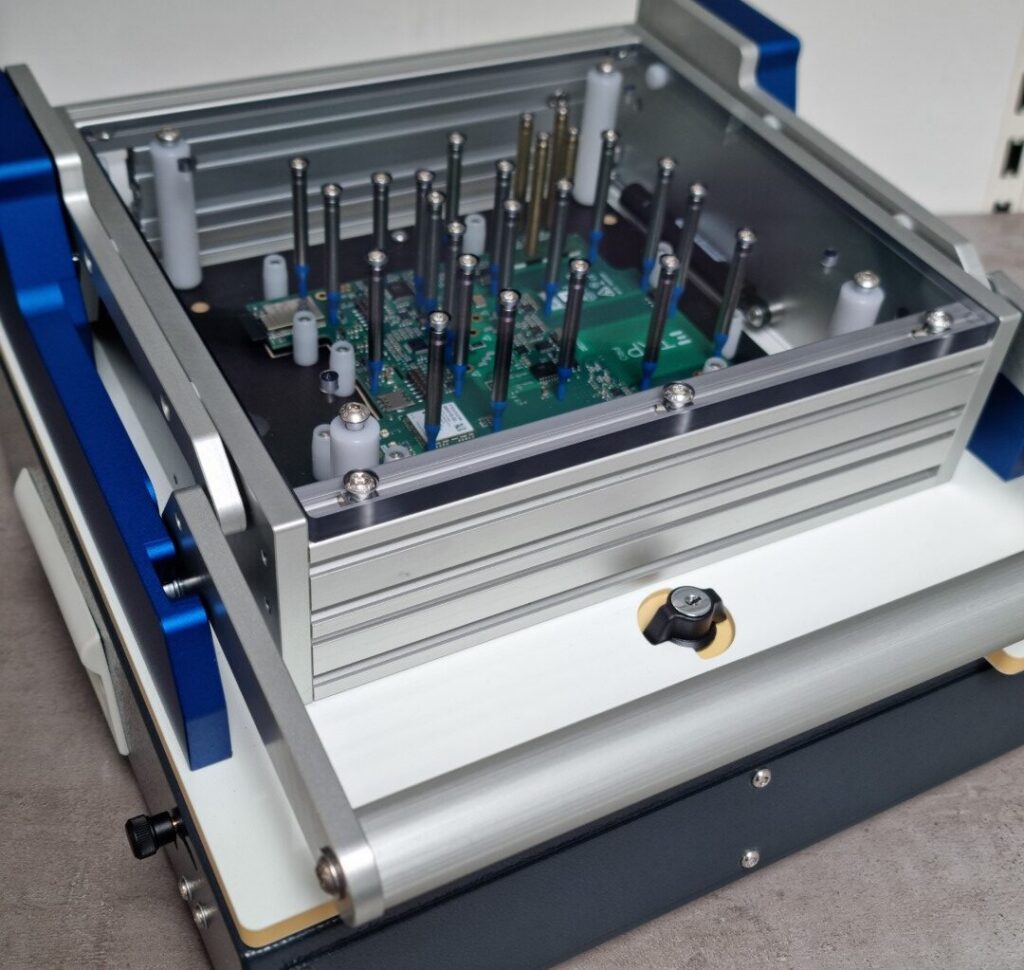
All testing functions are fully contained within the ATNET server test rig. This makes the setup compact and shippable, ensuring uniform quality assurance no matter where the testing takes place.
Removing dependencies on external components makes the design reproducible and duplicate in case scale-up demands greater testing throughput.